

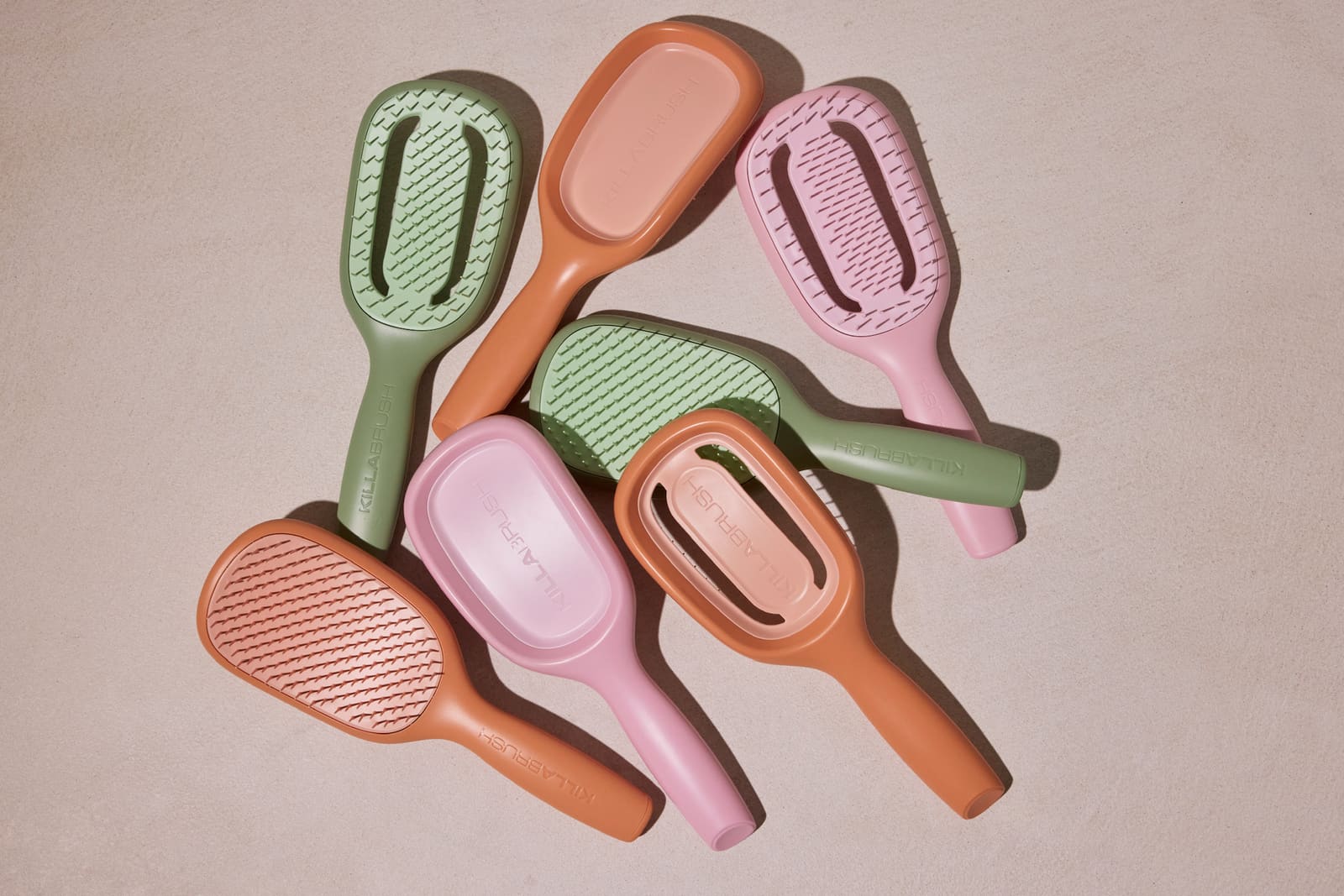
The short answer: your hairbrush collects oil, dead skin, product residue and microorganisms every time you use it. Take the loose hair out after every use and wash it once a week — especially if you use styling products or have an oily scalp — and replace it once the bristles are bent, splayed or worn.
Could your hairbrush be dirtier than a public toilet?
It’s not the most glamorous thought, but the hairbrush you use every day could be harbouring far more than loose hair. Every time you brush, it collects natural oils, dead skin cells, product residue, dust and microorganisms from your hair and scalp.
And here’s the worrying part: many of us wash our hair regularly but rarely think about cleaning the brush we’re putting straight back through it.
Is your hairbrush really dirtier than a toilet?
The comparison might sound dramatic, and no study has shown it. But there’s some eye-opening research behind concerns about hairbrush hygiene.
In a test for BBC Morning Live in 2024, microbiologists at the University of Warwick swabbed a small number of everyday hairbrushes and found faecal bacteria on five in every six of them (83%), with other types of bacteria on two in three (67%).
It was a small test rather than a large study, and the researchers saw no evident link between those bacteria and disease. That doesn’t prove every hairbrush is dirtier than a public toilet, but it does show how much can build up on an everyday grooming tool — and remember, your hairbrush comes into direct contact with your hair and scalp, often several times a day.
Bacteria, yeast and fungi: what’s living on your hairbrush?
Your scalp naturally hosts a community of microorganisms, including bacteria and yeasts. Many are completely normal and form part of a healthy scalp microbiome. But over time, your hairbrush also collects:
- Bacteria, transferred from your scalp, your hands and everything around you.
- Yeast, including Malassezia, a yeast that lives naturally on the scalp and is associated with dandruff and seborrhoeic dermatitis.
- Fungi, some of which can survive on combs, brushes and other shared items.
- Dead skin cells, shed naturally from the scalp and trapped between the bristles.
- Sebum and product residue — natural oils, dry shampoo, hairspray and styling products that build up with every use.
- Loose hair. It’s normal to shed between 50 and 100 hairs a day, according to the American Academy of Dermatology, and a good share of them end up wound around the bristles.
Not all microorganisms are harmful, and finding bacteria or fungi on a brush doesn’t mean you’ll develop a scalp condition. But sharing brushes can help spread some infections — the NHS advises not sharing combs, towels or bedding with someone who has ringworm, a fungal infection that can affect the scalp — and a brush full of residue makes good scalp hygiene harder work.
The grey, fluffy layer you can see at the base of an older brush is mostly that build-up, held together by hair.
Can a dirty hairbrush make my hair greasy?
Yes — a dirty hairbrush can make your hair look greasy sooner. A brush coated in oil and product residue doesn’t only pick that up; it spreads it. Brush freshly washed hair with it and you’re moving old oil and old product back through clean lengths and over the scalp — one reason hair can look flat or lank a day earlier than it should.
A dirty brush isn’t usually the reason a scalp is oily in the first place. How much oil your scalp produces comes down to things like hormones, genetics and how you wash. But if you’re washing often and your hair never seems to stay clean for long, the brush is an easy thing to rule out first — especially if you use a lot of dry shampoo or styling product.
Could your hairbrush be affecting your scalp health?
If you experience a greasy scalp, itching, flakes or recurring irritation, it’s worth thinking about more than just the shampoo you’re using.
Dandruff and seborrhoeic dermatitis, for example, are associated with the scalp’s response to Malassezia yeast. A dirty hairbrush isn’t the cause of these conditions — the NHS is clear that dandruff isn’t caused by poor hygiene — and nothing suggests a dirty brush makes hair fall out from the root. A worn brush dragged through knots can snap hair, but that’s breakage along the length, not hair loss.
Still, keeping your brush clean is an important part of your overall scalp-care routine. And if you’ve invested in professional scalp treatments and quality haircare products, why put a dirty brush straight back through freshly washed hair?
How much hair in my hairbrush is normal?
Some hair in your brush every day is normal. Shedding is part of every hair’s growth cycle, and losing 50 to 100 hairs a day is typical — often more on the days you wash or brush after a break, because hairs that were already loose come out together.
What’s worth paying attention to is change: noticeably more hair in your brush, the shower or on your pillow than usual, for more than a few weeks; a parting that looks wider; or a ponytail that feels thinner. That’s the point to stop guessing. Our guide to telling shedding from early thinning is a good next read, and a consultation at PeterJames Scalp & Hair Clinic is where we look properly.
How often should you clean your hairbrush?
Ideally, remove loose hair after every use and wash your hairbrush regularly, following the manufacturer’s instructions. For a conventional hairbrush, a weekly clean is a good starting point — particularly if you use styling products or have an oily scalp, or you’re following a scalp-care routine we’ve prescribed.
If you can see a grey film at the base of the bristles, it’s overdue.
How do I clean my hairbrush?
Warm water, a little shampoo and an old toothbrush are all you need.
- Take the hair out. Lift it with the tail of a comb, or a pen. If it’s matted, snip through the middle of the clump and pull each half out.
- Wash the bristles. Swish them in warm water with a few drops of gentle shampoo, and work between the rows with an old toothbrush to loosen anything stuck at the base.
- Rinse well under warm running water until it runs clear.
- Dry it bristle-side down on a towel, so water doesn’t sit in the cushion or the base.
Adjust for what your brush is made of. A plastic brush can take a short soak. A wooden brush, or one with natural bristles, shouldn’t be soaked at all — dip just the bristles, wipe the body with a damp cloth and give it plenty of time to dry.
When should I replace my hairbrush?
Replace your hairbrush when the bristles are bent, splayed or missing, when the rounded tips on the bristles have worn away, when the cushion has split and lets water in, or when you can’t get it properly clean any more — there’s no fixed date. Worn bristles drag and snag, and bare bristle ends can scratch the scalp — the opposite of what a brush is for.
What hairbrush should I use?
The right hairbrush depends on your hair type and what you’re asking it to do. A few general pointers:
- Paddle brushes cover a lot of hair at once and are good for detangling and smoothing longer hair.
- Vented brushes let air through, which makes them quicker for rough-drying.
- Round brushes are for shape and volume during a blow-dry, rather than everyday brushing.
- Wavy, curly and coily hair is usually best detangled wet, with conditioner in, using a wide-tooth comb or a brush made for detangling — and brushed as little as possible once it’s dry.
- Fine, fragile or thinning hair wants flexible bristles with rounded tips, and a gentle hand.
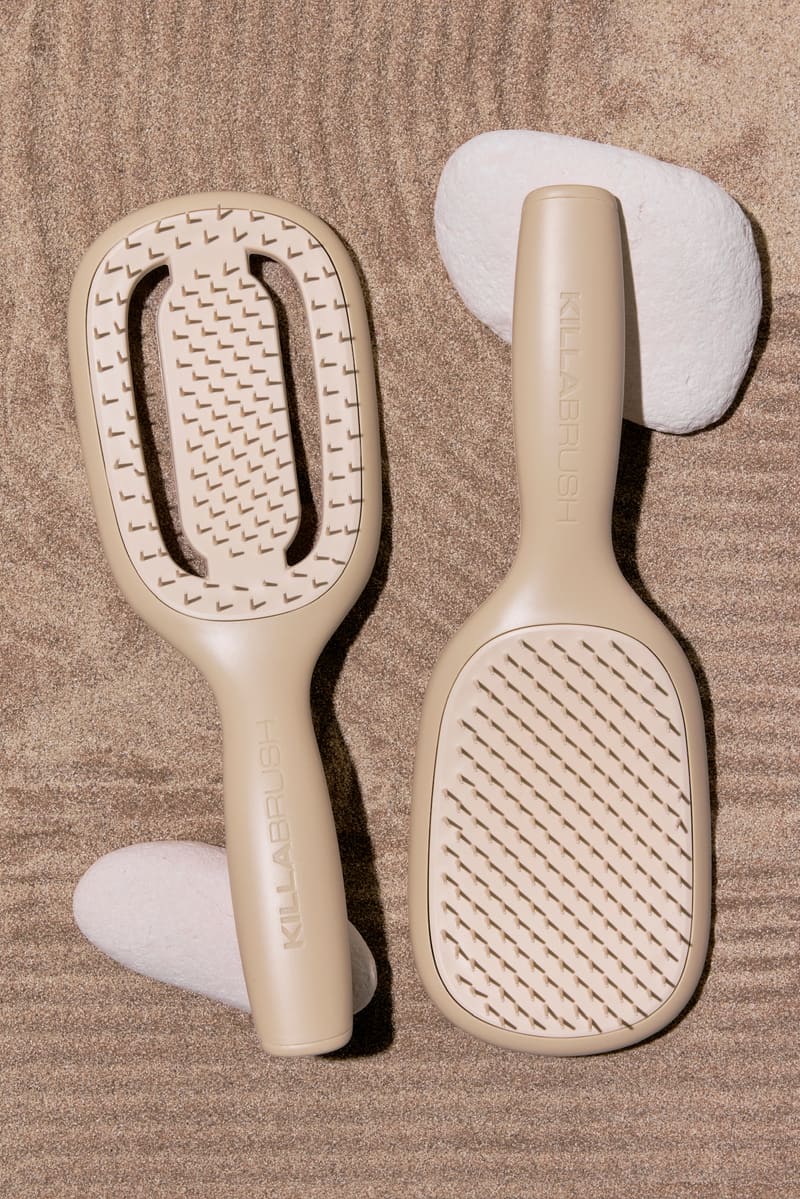
Whatever you choose, how you brush matters as much as what with. Start at the ends and work up, and never drag a brush through a knot from the root. If you’re not sure what suits your hair, ask us at your next appointment.
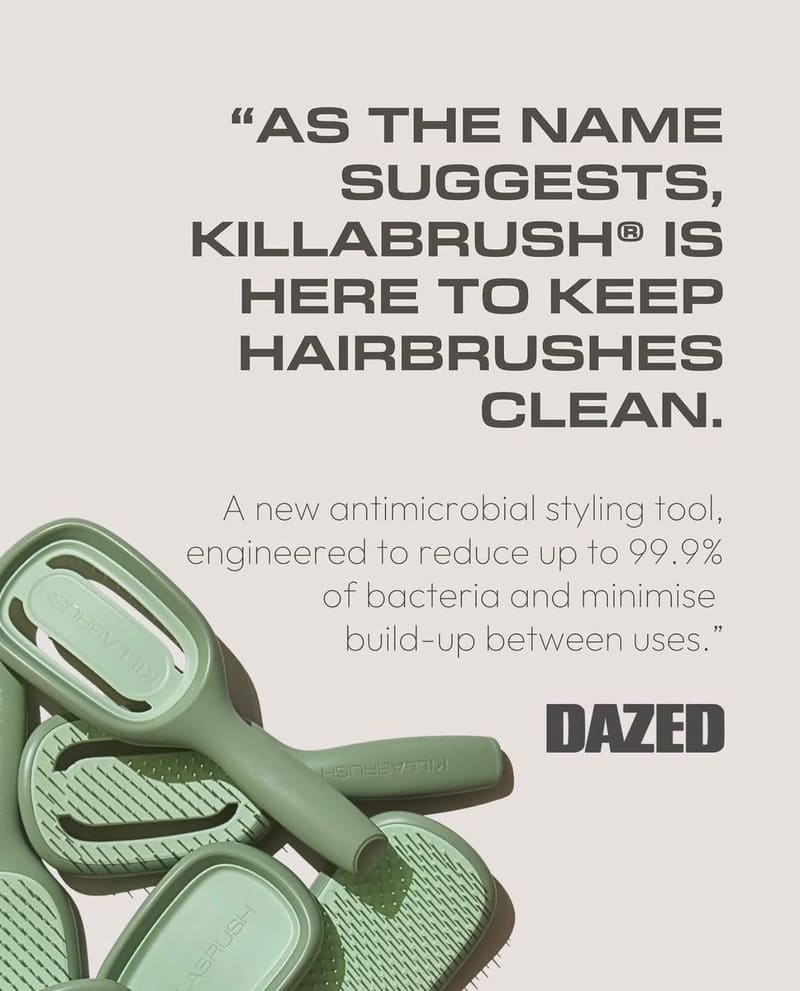
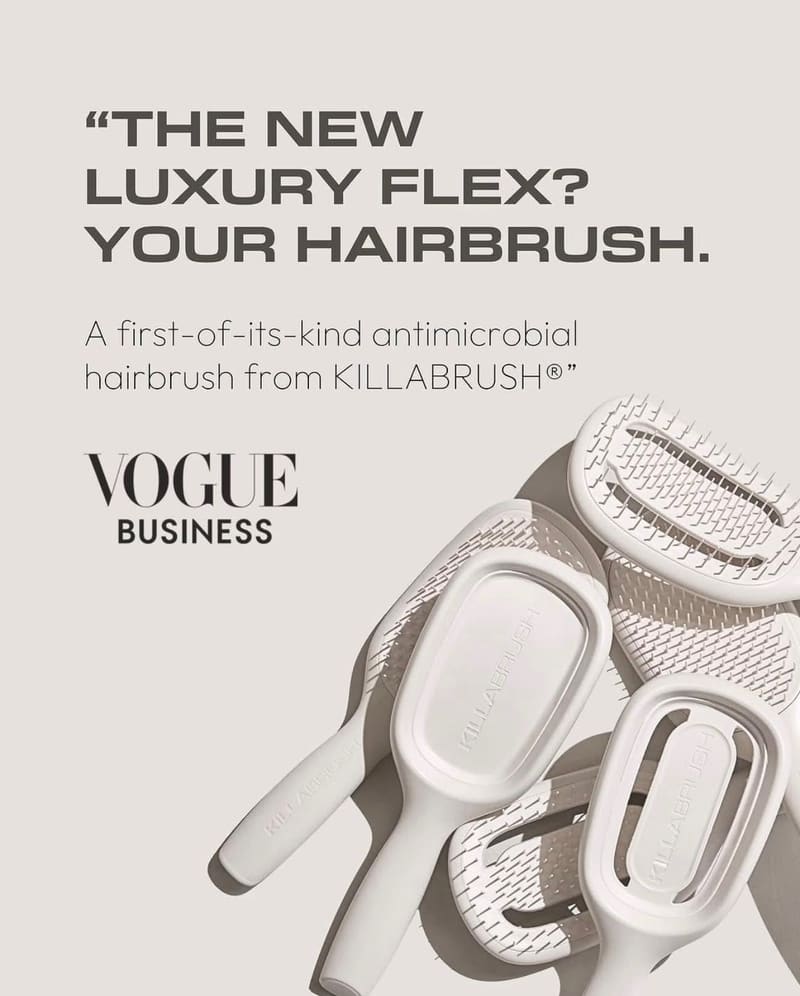
But what if your hairbrush could actively help reduce microbial build-up between washes?
Introducing KILLABRUSH: a new generation of hairbrush
At PeterJames Scalp & Hair Clinic, we’re proud to be official stockists of KILLABRUSH — the world’s first active antimicrobial hairbrush, according to the brand.
Unlike a conventional hairbrush, KILLABRUSH uses BioBristle™ technology: an antimicrobial ingredient, benzalkonium chloride, is embedded directly into the bristle material during manufacture. It’s not simply a coating that washes away.
What makes KILLABRUSH different?
According to KILLABRUSH’s independent laboratory testing, its antimicrobial technology achieves:
- Up to 99.99% reduction in bacteria on the tested brush surface, tested to ISO 22196, the international standard for measuring antibacterial activity on plastics and other non-porous surfaces.
- Up to 99% reduction in fungi on the brush surface, under laboratory test conditions.
- Antimicrobial protection built into the bristles, rather than applied as a temporary surface treatment.
- Protection designed to last the working life of the brush — around 18 months of normal use.
- Smooth, flexible bristle tips designed to glide through wet or dry hair.
These are laboratory-tested properties of the brush material, not evidence that the brush treats scalp conditions or prevents hair loss. KILLABRUSH still needs routine cleaning to remove trapped hair, oils and styling products — think of it as a cleaner tool for less effort, not one that never needs looking after.
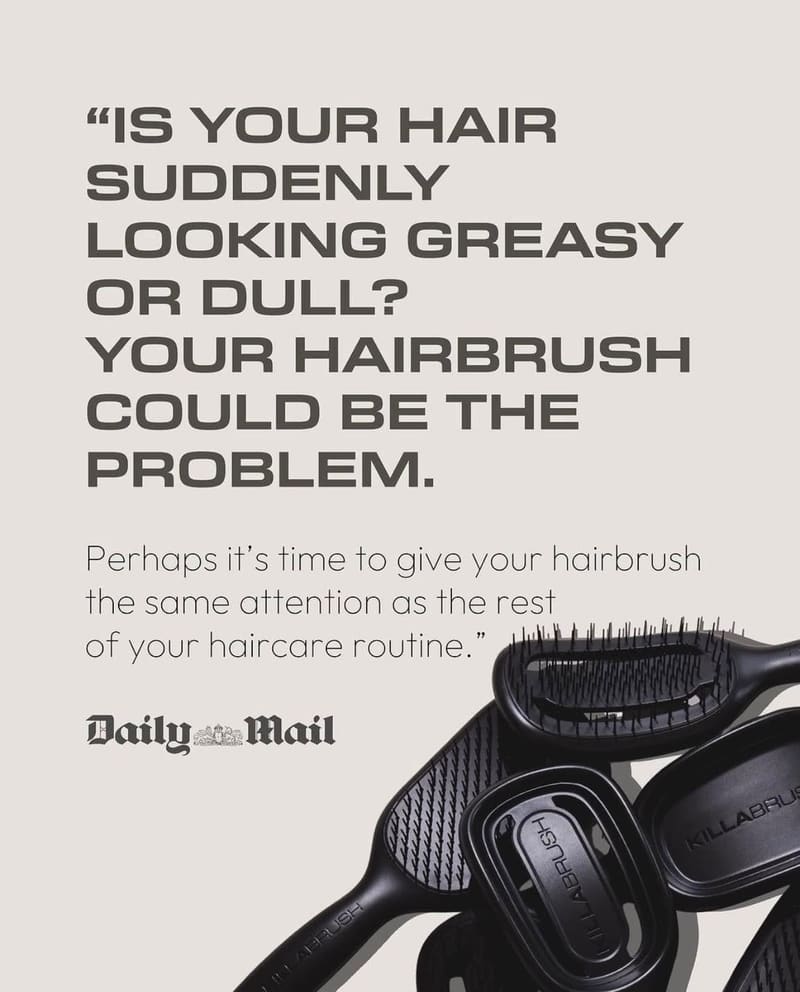
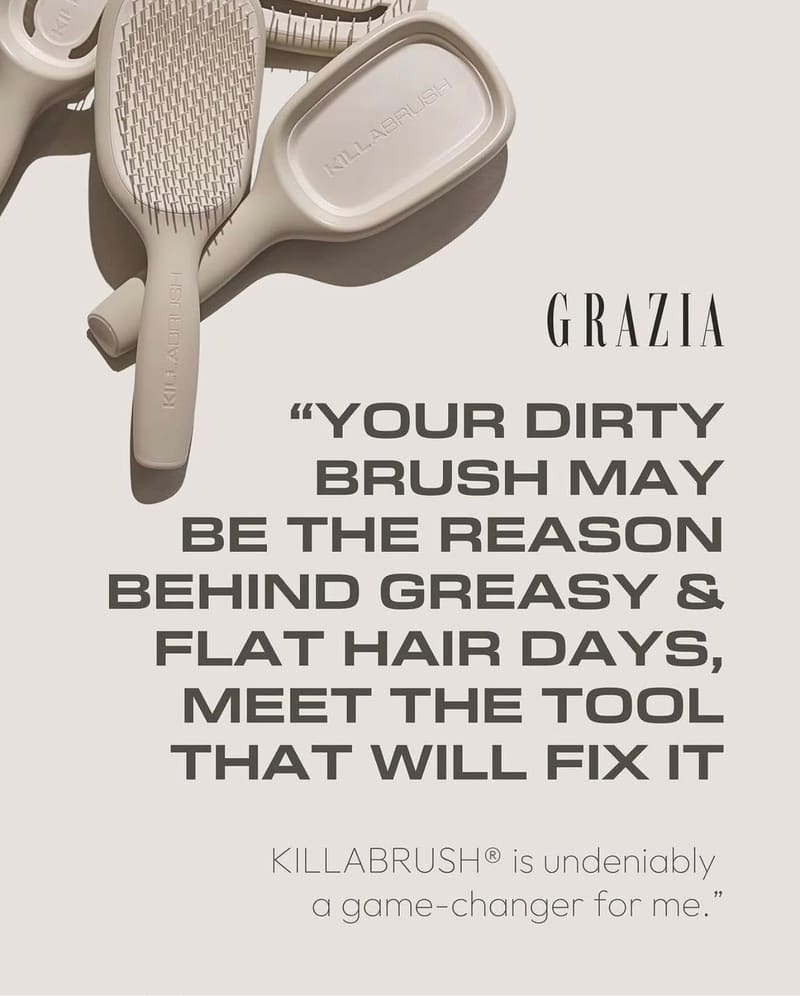
It’s had plenty of attention since launch, too:
Beautiful hair starts with better scalp care
We spend so much time choosing the right shampoos, conditioners, scalp serums and treatments, yet one of the most frequently used tools in our haircare routine is often overlooked.
At PeterJames Scalp & Hair Clinic, we believe healthy-looking hair begins with understanding and caring for your scalp. We look at it under a digital microscope, checking for things like dryness, oiliness, flaking and build-up, and we put real thought into the care and treatment we prescribe — because the products you use, the tools you style with and the habits you keep at home all count, not only what happens in the chair.
That’s why we’re excited to introduce KILLABRUSH to our professional haircare collection. It’s now one of our professional partnerships.
Your scalp deserves better than a dirty hairbrush.
Discover KILLABRUSH at PeterJames Scalp & Hair Clinic, 119-121 Dalry Road, Edinburgh, and ask our team how to make it part of your everyday haircare routine. And if your scalp is oily, flaky, itchy or irritated however often you wash your hair and your brush, a consultation at PeterJames Scalp & Hair Clinic is time set aside to look at it properly — under the microscope, with a plan you understand at the end of it.